Not to be missed: ‘Humanity has said: Enough is enough!’ exhibition in Berlin
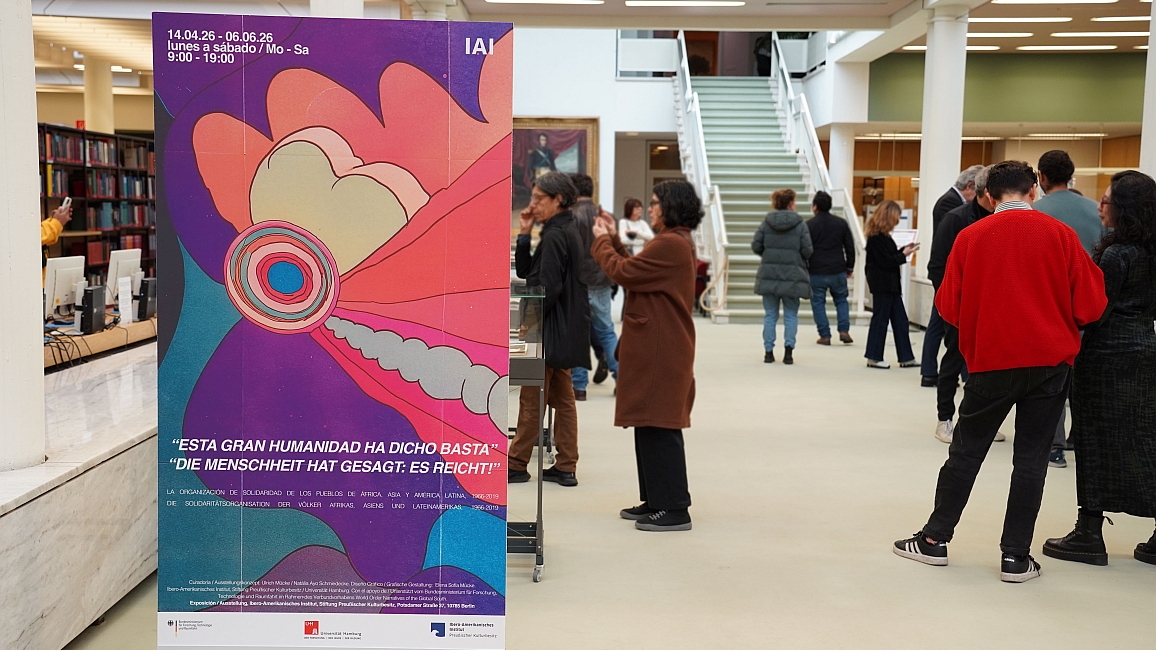
Humanity has said: Enough is enough!’ – an exhibition featuring poster art and publications from post-revolutionary Cuba during the Cold War has been running in Berlin since April. Curated as part of the BMFTR project WONAGO, it brings historical research into aesthetic narratives to the fore.
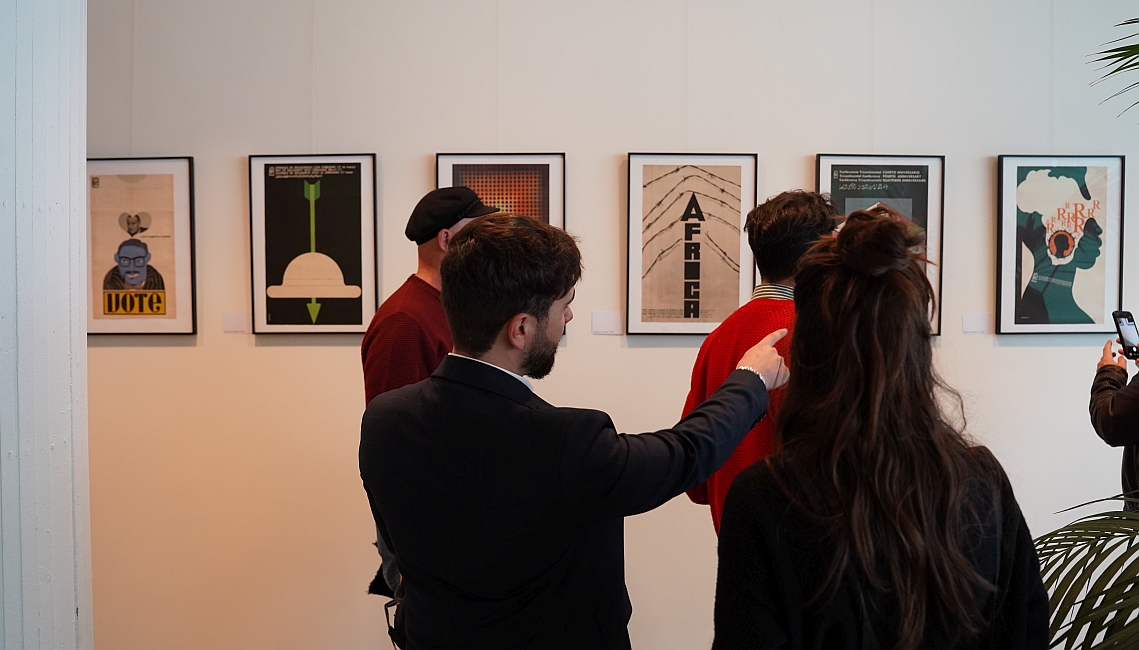
Impression from the exhibition “Humanity has said: Enough is enough!”
Ibero-Amerikanisches Institut SPK
The exhibition on the history and poster art of OSPAAAL, the Organisation of Solidarity with the Peoples of Africa, Asia and Latin America, 1966–2019, opened with a symposium on 14 April 2026 at the Ibero-American Institute, Prussian Cultural Heritage Foundation in Berlin, and runs until 6 June 2026. Under the title “Humanity has said: Enough is enough!”, it presents poster designs and publications from post-revolutionary Cuba during the Cold War. A colourful mix with a clear message: they all proclaim the inevitable victory of the revolution in the states of what was then known as the “Third World”. In doing so, they draw on avant-garde movements such as Pop Art, Op Art, Conceptual Art and Minimalism.
Experience the graphic heritage of OSPAAAL
Dr. Natália Schmiedecke is a research fellow in the Global History Department at the University of Hamburg and, together with Prof. Mücke, curated the exhibition as part of the BMFTR project WONAGO.
These works were commissioned by OSPAAAL, the Organisation for the Solidarity of the Peoples of Africa, Asia and Latin America, in the 1960s and early 1970s against the backdrop of the Cuban Revolution following the overthrow of the dictator Fulgencio Batista. On display are original prints and other objects from the collections of the University of Hamburg and the Ibero-American Institute. “Our exhibition explores the history of OSPAAAL as well as the political and artistic dimensions of the organisation’s cultural output,” says Professor Ullrich Mücke, project leader of the BMFTR joint research project „World Order Narratives of the Global South”. He has been Professor of the History of Latin America and the Iberian Peninsula at the Department of History at the University of Hamburg since 2007 and conceived the exhibition together with Dr Natália Ayo Schmiedecke (University of Hamburg).
Fostering a more revolutionary global consciousness
OSPAAAL was founded during the Tricontinental Conference held in the Cuban capital, Havana, in January 1966: more than 600 delegates from 82 Latin American, African and Asian countries gathered there, including heads of state and representatives of revolutionary movements. Their common goal: to create a global revolutionary consciousness. “To strengthen this consciousness, the Cuba-funded organisation produced books, films, magazines, posters and other materials,” says Mücke, “They are geared towards the narrative of an inevitable victory of the revolution in the states of what was then known as the ‘Third World’. Whilst OSPAAAL was finally closed in 2019, international research interest in its graphic legacy, which is deeply rooted in the history of the Cold War, is growing” (for more on this, see the exhibition text).
Bringing WONAGO Research to Light
Prof. Dr. Ulrich Mücke, project leader of the WONAGO project, has been Professor of the History of Latin America and the Iberian Peninsula at the Department of History at the University of Hamburg since 2007. His research focuses on 19th-century history, Atlantic history, Latin American history, the history of personal accounts in Latin America, migration history and the history of international trade.
There are good reasons why this exhibition has been created as part of the BMFTR-funded project “World Order Narratives of the Global South (WONAGO)”. With the collapse of the bipolar world of the Cold War, centres of power shifted. The Global South gained in influence – politically, economically and socially. Nevertheless, common explanations often fall back on familiar patterns: US dominance, new forms of multilateralism or the rivalry between Washington and Beijing. But in doing so, the visions of order held by many countries in the South are overlooked. This is precisely where WONAGO comes in,” explains project leader Mücke. “We want to understand which concepts states and societies in the Global South are developing themselves. With the exhibition ‘Humanity has said: Enough is enough!’, we are making these world order narratives – that is, deliberately formulated ideas that link power and interests to a specific conception of one’s own global position – visible.”
The exhibition on the history and poster art of OSPAAAL, the Organisation of Solidarity with the Peoples of Africa, Asia and Latin America, 1966–2019, runs from 14 April 2026 to 6 June 2026, Monday to Saturday, 9:00 am – 7:00 pm at the Ibero-American Institute, Prussian Cultural Heritage Foundation, Potsdamer Straße 37, 10785 Berlin.
Impression from the exhibition “Humanity has said: Enough is enough!”
Ibero-Amerikanisches Institut SPK
The BMFTR project ‘World Order Narratives of the Global South’ (WONAGO)
The collaborative project „World Order Narratives of the Global South” examines world order narratives in Latin America, Africa, the Middle East and Asia by investigating world order narratives in the Global South, the role of historical conceptions in contemporary world order narratives, and the development of alternative narratives. The project, led by Prof. Dr Ulrich Mücke and Prof. Dr Eckart Woertz, is based in the Global History section of the Faculty of History at the University of Hamburg and is carried out in cooperation with the German Institute for Global and Area Studies (GIGA), funded by the BMFTR. Duration: 2021–2027.
We want this website to meet your needs as best as possible. To this end, we use cookies and the web analytics tool Matomo to learn which pages are visited most often. Your visit is currently not being counted. By allowing us to count your visit anonymously, you help us to achieve this goal. Web analytics enable us to adapt this website to your needs. No data is forwarded to third parties. For further information, please see our privacy notice.