MECILA-Fellow-Project on tour in German museums: Masks of the Apyãwa between ritual and market
The late 1960s were marked by profound upheaval for many indigenous communities in Brazil. It was during this period that the Apyãwa began selling their Ype masks. Today, social anthropologist Dr Ana Coutinho, a MECILA Junior Fellow explores the transition from ritual to market and shares her insights with a German audience.
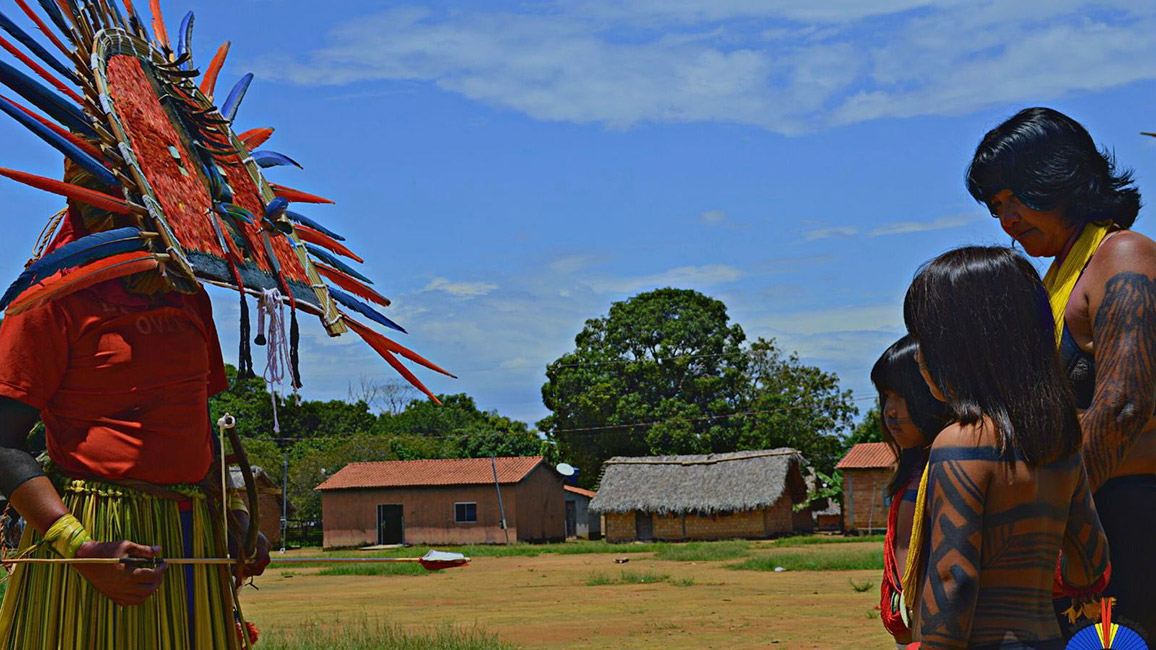
Ype-Masken, traditionelle Rituale der Apyãwa-Tapirapé
Dr Ana Coutinho is a social anthropologist and postdoctoral researcher at the Maria Sibylla Merian Centre Conviviality-Inequality in Latin America (Mecila). As part of her Mecila Junior Fellowship, she is researching the Ype masks of the Tapirapé Apyãwa, which once shaped rituals and are now kept in ethnographic museums.
Dr Ana Coutinho, you have been conducting research as a Junior Fellow at MECILA since 2025. What is your research project ‘Ype: The Itineraries of an Apyãwa-Tapirapé Mask (1960-2023)’ about?
After long-term ethnographic research with the Apyãwa-Tapirapé Indigenous people of Central Brazil, in the state of Mato Grosso, conducted during my doctoral studies at the National Museum in Rio de Janeiro, I have dedicated this research, as a Junior Fellow at MECILA, to investigating the trajectories of a specific artifact of this people, namely the Ype mask (Cara-Grande).
Ype masks by the Apyãwa-Tapirapé
Ana Coutinho
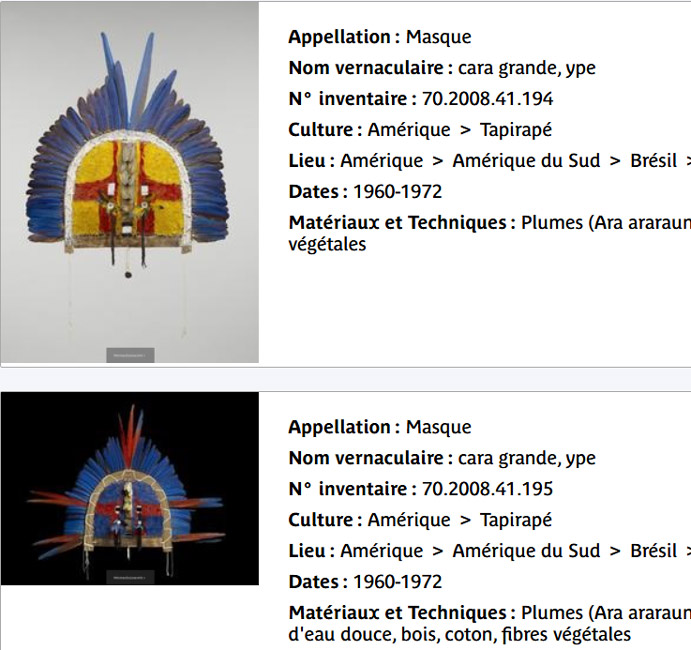
Evoking the historical enemies of the Apyãwa-Tapirapé in their ritualization of warfare and contact with neighboring and foreign peoples, the Ype mask is today part of the collections of various ethnographic museums in Europe, North America, and Brazil, being an artifact widely disseminated in museum collections both in Brazil and abroad. The research seeks to analyze the strategies mobilized by the Apyãwa-Tapirapé in this collective action of the systematic sale of masks, which expresses a convivial pact within a broader context of inequality. The research examines Indigenous strategies through the trajectories and meanings of the circulation of the Ype mask, focusing on two key moments: (I) the context in which the masks were first produced and sold outside the village (1960s), becoming part of private collections and later entering museum holdings; (II) the Apyãwa-Tapirapé’s reception of digital images of the masks, linked to the current process of musealization taking place in the village.
In the final stage of my postdoctoral research, it was possible to develop a project, supported by the Guimarães Rosa Institute, the Brazilian Embassy in Berlin, and MECILA, which involves inviting two specialists from the Tapirapé Indigenous people to Germany. The aim was to propose a re-encounter with these masks that were commercialized in the late 1960s and are now held in various museum institutions. In addition, we organized a series of workshops in these institutions, in which the Apyãwa presented their perspectives on the moment when masks began to be produced for circulation beyond the village.
One of the events took place in the context of the exhibition Amazônia at the Bundeskunsthalle in Bonn. The exhibition features Ype masks and will provide an opportunity for dialogue on the productive intersections between artifact, commodity, and work of art from an Apyãwa perspective. We will also be able to include in the final research article some reflections on the Indigenous participants’ visits to these collections.
What is your event at the Art and Exhibition Hall of the Federal Republic of Germany, or Bundeskunsthalle for short, about? And what message would you like to convey to visitors?
The Amazônia exhibition (13 March to 9 August 2026) seeks to present a different conception of the forest, one that departs from the idea of a pristine wilderness devoid of beings, and instead understands it as populated by people, beings, artifacts, humans, and non-humans. Within the context of this exhibition, Ype masks will be featured. We held a public event with Indigenous specialists Makato Tapirapé and Paroo’i Tapirapé, who explained how this Apyãwa strategy was carried out in the late 1960s. The message to visitors is precisely an invitation to rethink relations between Indigenous and non-Indigenous peoples through an artifact and its trajectories of circulation between villages and museums. The Indigenous perspective helps to tell alternative stories about the relationships that can emerge around objects.
How does your project fit into MECILA's research programme?
The research fits into the MECILA program on several levels. The first and most comprehensive is that the Apyãwa-Tapirapé experience can be better understood through the notions of inequality and conviviality conceived as constitutive. It was within a context of inequality (between non-Indigenous Euro-American and Brazilian buyers) that an Indigenous strategy, organized through a bond of conviviality, took shape. There was a collective agreement established through convivial relations within the Indigenous community that created aesthetic parameters for the production of masks for sale. This convivial pact to produce masks for circulation beyond the village also included relationships with non-humans (spirits represented in the ritual masks). One branch of MECILA’s research program specifically addresses relations between humans and non-humans, which can further enrich discussions on conviviality and inequality.
In addition, the project has presented to the Apyãwa the locations and images of masks held in Euro-American ethnographic museums, and this information will be made available within the Indigenous community. This initiative places at the center of the discussion debates on inequalities of access to collections and digital resources. The research project is part of MECILA’s Research Area “Medialities of Conviviality”.
How can we investigate whether and to what extent the transfer of ritual objects to European and American museums is an expression of historical inequalities?
Power inequalities have always shaped relations between countries of the Global North and the Global South, and the extraction of objects from Indigenous contexts, as well as their accumulation in European museums, has not necessarily been based on relations of consent or symmetry. In many cases, the accumulation of such objects has accompanied violent colonial relations; the large-scale removal of objects from their contexts of origin is understood as another modality of this colonial relationship.
How do you incorporate the perspectives of the Tapirapé-Apyãwa into your research?
The questions proposed are based on ethnographic research conducted with the Apyãwa in their villages, and it was through ongoing dialogue with them throughout the research that we arrived at these formulations. It was through research with the ritual specialists Xario and Korako Apyãwa that the details regarding the differences between ritual masks and those produced for sale were further developed.
How did the Apyãwa come to sell their masks?
In the late 1960s, the Apyãwa lived near the Araguaia River and frequently received visits from tourists and traders of objects. It was during this period that the practice of selling masks became established, and a series of transformations were introduced to the Ype so that they could become marketable.
How were the masks altered to make them marketable?
The research sought to elucidate the modes of differentiation between masks used in rituals and those produced for sale. Although they share the same morphology, ritual masks have a chromatic combination made with macaw feathers that can never be altered. The colors and graphic designs that appear on ritual masks were visions of the shamans from time immemorial, and their production must follow this vision. Moreover, the colors of ritual masks refer to enemy peoples of the past, whereas masks produced for sale do not include such references, as they always present some chromatic modification in the feather composition on the face of the mask or in its headdress. In other words, at first glance the masks may appear similar, but each set (ritual and commercial) has distinct aesthetic purposes and effects.
The distinct contexts in which ritual masks and those produced for sale are crafted also play a role in attributing efficacy and inefficacy to the masks.
And what impact did this have on their ritual use?
At the same time that the Apyãwa were selling masks outside the village, they were undergoing a period of intense ritual revival and the organization of the major Ype mask festivals. In other words, these were not processes that diminished one another; rather, they were concurrent. The Apyãwa were reorganizing themselves as a people after a period of significant demographic decline. During this phase of reorganization, while they were reestablishing their rituals, they also began to occupy spaces in museums, through the presence of Ype masks produced for sale.
What significance do Ype masks have today – both for the community and for museums?
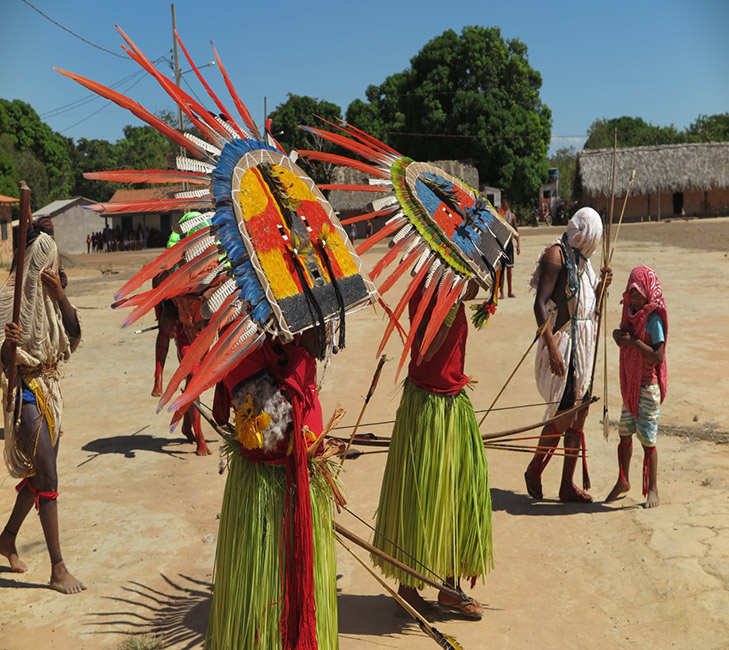
Today, Ype masks are found in most ethnographic museums in the Global North. For the Apyãwa, there was a deliberate desire to occupy these museum spaces, which can be understood as an Indigenous political strategy, reflecting an approach opposite to the typically colonial one. The contemporary Apyãwa ritual centers on the tawã festival (tawã-rarywa), when the masked spirits of enemies enter the village wearing the Ype masks. This is a ritual performed annually by the Apyãwa people.
Thank you very much for the exciting insights and perspectives, Dr Coutinho!
(The interview was conducted in writing on 27 March 2026; questions: Katrin Schlotter)
Ype masks, traditional rituals by the Apyãwa-Tapirapé
Ana Coutinho
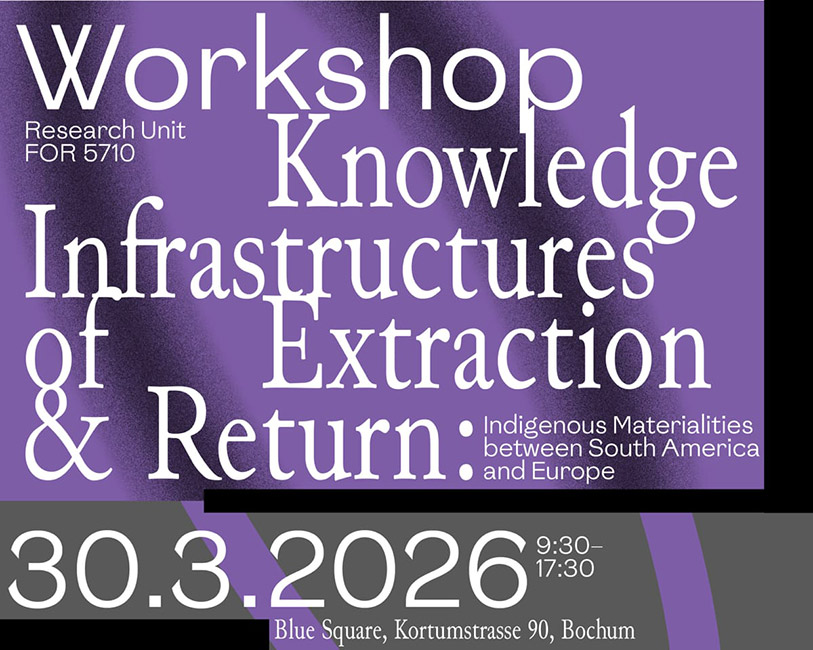
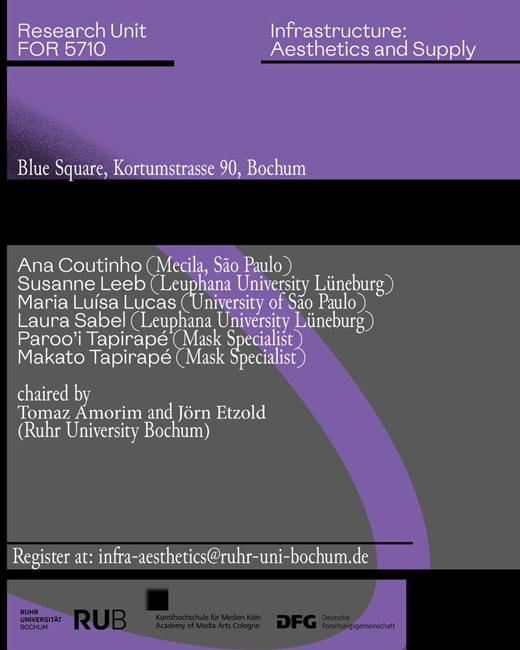
'Workshop Knowledge Infrastructures of Extraction & Return: Indigenous Materialities between South America and Europe"
Ana Coutinho
Event of the research group FOR 5710 at Blue Square in Bochum
Ana Coutinho
MECILA
The Maria Sibylla Merian Centre Conviviality-Inequality in Latin America (Mecila), headquartered in São Paulo, Brazil, is an academic consortium consisting of three German institutions and four other Latin American institutions. It has been funded by the BMFTR since 2017. Mecila's research focuses on past and present forms of social, political and cultural coexistence in Latin America and the Caribbean. Conviviality serves as a central analytical concept for investigating different forms of coexistence in specific contexts characterised by both diversity and inequality. Through horizontal interdisciplinary co-operation between researchers from Germany, Latin America, the Caribbean and other regions of the world, the research college aims to achieve an innovative exchange of knowledge that enriches both European and Latin American social science and humanities research.
The Merian Centres and the internationalisation of the humanities and social sciences
The BMFTR initiative of the Merian Centres is a globally unique funding format for the internationalisation of the humanities and social sciences. At the five BMFTR-funded Merian Centres in Latin America, India and North and West Africa, fellows from Germany, the host country and other regions of the world conduct joint research from various specialist perspectives on a topic of their choice. They analyse social issues in their transnational contexts from a humanities and social science perspective and thus offer orientation and action knowledge for dealing with current global challenges.
We want this website to meet your needs as best as possible. To this end, we use cookies and the web analytics tool Matomo to learn which pages are visited most often. Your visit is currently not being counted. By allowing us to count your visit anonymously, you help us to achieve this goal. Web analytics enable us to adapt this website to your needs. No data is forwarded to third parties. For further information, please see our privacy notice.