Transfer to the power of three in regional studies: WONAGO exhibition and conference now in São Paulo
The University of Hamburg is staging no fewer than three exhibitions in 2026 as part of the BMFTR-funded project ‘World Order Narratives of the Global South’ (WONAGO): Following the exhibition in Berlin, the poster art of OSPAAAL is now on display in São Paulo. A specialist symposium is taking place in parallel.
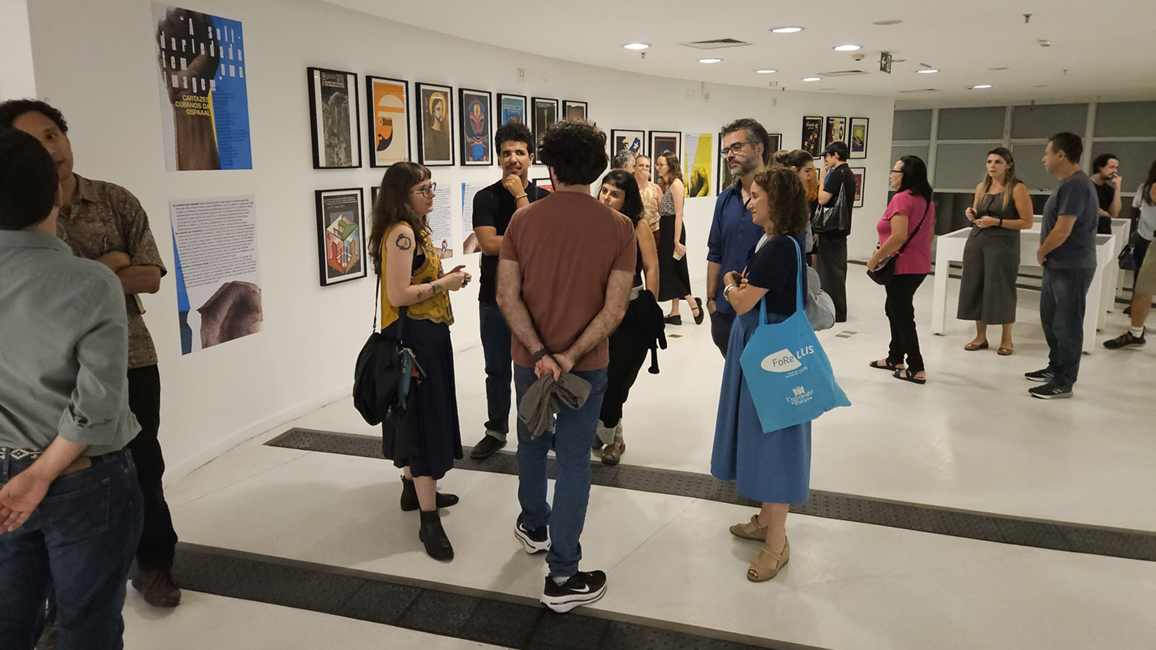
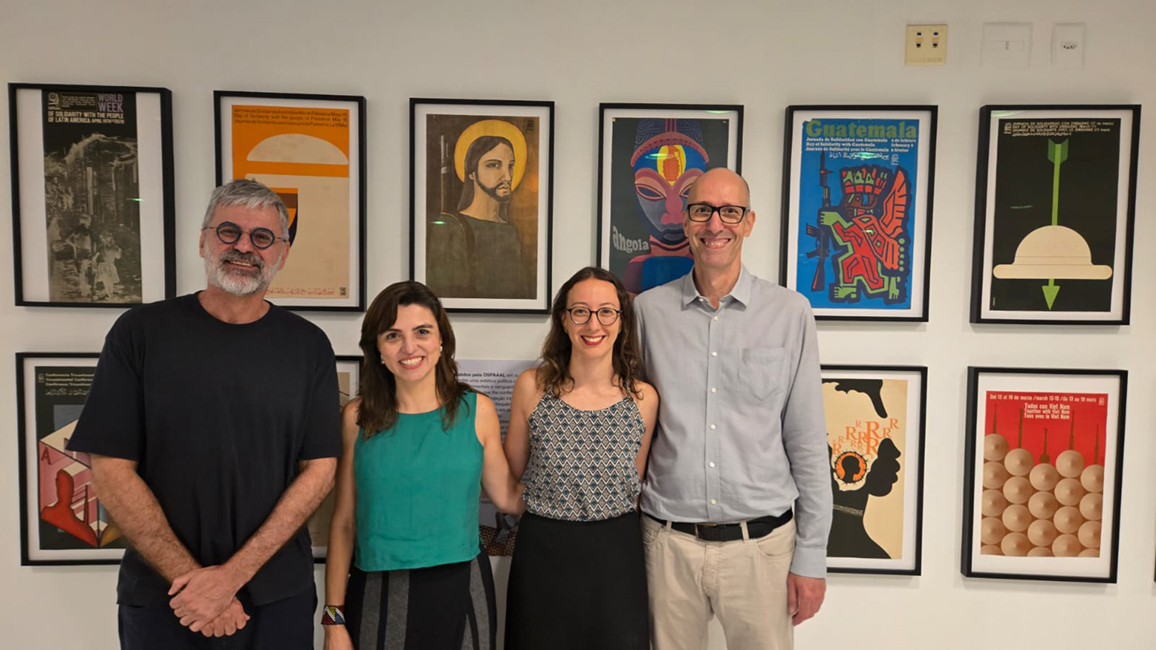
Opening of the OSPAAAL exhibition at the Museu de Arte Contemporânea da Universidade de São Paulo (MAC-USP) on 19 August 2026.
From 19 August to 19 September 2026, the Museu de Arte Contemporânea da Universidade de São Paulo will host an exhibition of posters by the Cuban Organisation for Solidarity with the Peoples of Africa, Asia and Latin America (OSPAAAL). The exhibition is curated by Prof. Dr Ulrich Mücke and Dr Natália Schmiedecke (both from the University of Hamburg) in collaboration with Prof. Dr Carolina Amaral de Aguiar (University of São Paulo).
The exhibition includes an international symposium on South–South solidarity during the Cold War, which will also open on 19 August with presentations by Prof. Dr Fernando Camacho (Madrid) and the graphic designer and professor of graphic design Pepe Menéndez (Havana). The conference, organised in collaboration with the Institute of International Relations at the University of São Paulo, will run over two days and feature a total of 30 presentations. These outreach activities form part of the World Order Narratives of the Global South (WONAGO) project, which is funded by the Federal Ministry of Research, Technology and Space (BMFTR) in the field of regional studies, with the aim of disseminating knowledge about the world’s regions to the wider public.
Posters for the Revolution
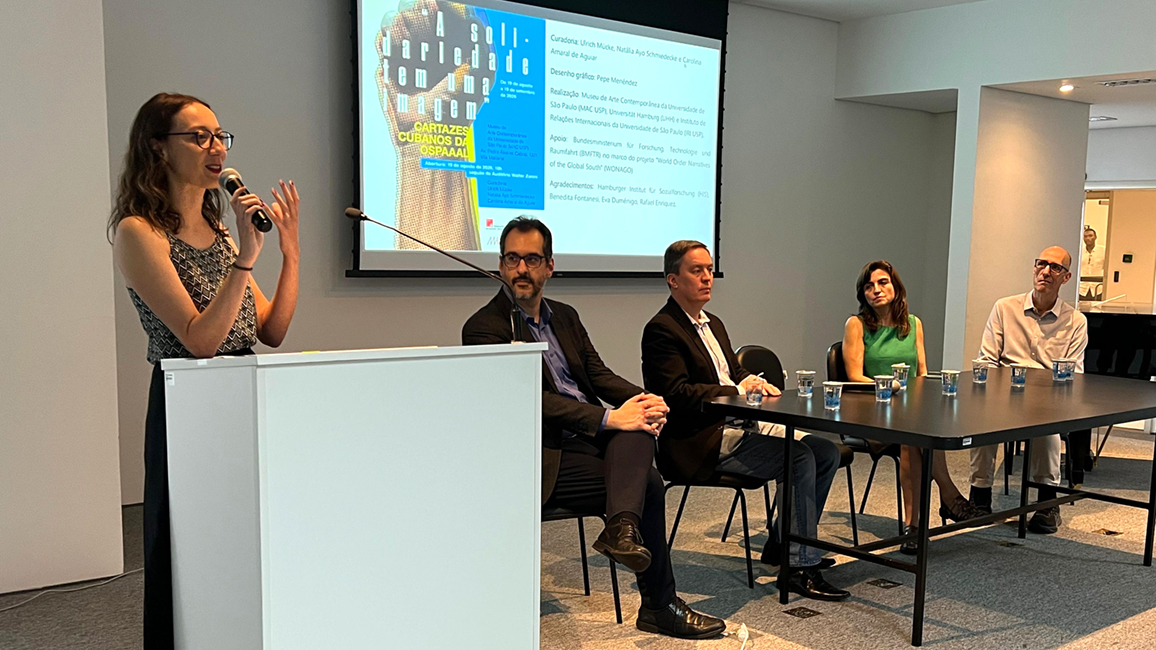
Opening of the conference and the exhibition at the MAC USP. From left to right: Natália Ayo Schmiedecke (UHH), Felipe Loureiro (USP), Alexandre Morelli (USP), Carolina Amaral de Aguiar (USP), Ulrich Mücke (UHH).
The exhibition focuses on the artistic development of poster art produced by OSPAAAL (Organisation for the Solidarity of the Peoples of Africa, Asia and Latin America) and draws attention to interesting research questions concerning narratives of the world order in the Global South during the Cold War. OSPAAAL was founded in 1966 as part of the Tricontinental Conference. Its aim was to coordinate and strengthen the struggle against colonialism and imperialism in the Global South. Contrary to the original plans, it remained a largely Cuban organisation, which became known chiefly through its magazine, distributed worldwide, and the posters enclosed with it. In the magazine and on the posters, OSPAAAL promoted the armed struggle in the so-called Tricont. In their endeavour to convey messages across different linguistic and cultural contexts, the artists responsible for these publications developed a unique visual language: it combined various styles, multiple languages and shared symbols of oppression and resistance. The aim was to visually link geographically distant struggles of the past and present, whilst promoting armed revolution as the path to the liberation of oppressed peoples. In this way, the OSPAAAL printing works actively contributed to the construction of the concept of the ‘Third World’ and established an aesthetic of the internationalisation of the struggle that was to gain considerable influence.
Art for the streets
Pictured are the Director of the MAC USP, José Tavares Lira, and the three curators: Carolina Amaral de Aguir (USP), Natália Ayo Schmiedecke (UHH) and Ulrich Mücke (UHH).
The OSPAAAL posters were not intended for art museums, but for public and political use. They were intended primarily to circulate amongst political activists and to be displayed in places where political debates took place: on street walls, in halls of residence, at student unions and within political organisations. In this sense, their subsequent dissemination in catalogues and exhibitions shifts their original meaning: they were transformed from instruments of political intervention into objects of aesthetic appreciation. To recall their original purpose, the current exhibition displays 21 posters (out of a total of around 380) bearing signs of wear and tear.
In the best of company
Dr Natália Schmiedecke is a research fellow in the Global History section at the University of Hamburg and, together with Prof. Mücke, curated the exhibition as part of the BMFTR WONAGO project.
The OSPAAAL exhibition is on display at the Museu de Arte Contemporânea da Universidade de São Paulo (MAC-USP), one of the most important museums of contemporary art. Revolutionary art is thus now in the best of company alongside works by leading Brazilian artists and Pablo Picasso, Amedeo Modigliani, Joan Miró, Wassily Kandinsky, Henri Matisse and Joseph Beuys. And that’s not all: for the very first time, the exhibition is showing a large number of OSPAAAL posters outside Europe and the USA. All the posters come from the collections of the University of Hamburg and the Hamburg Institute for Social Research. The exhibition focuses on the artistic development of OSPAAAL’s poster art and, at the same time, highlights just how brief the avant-garde phase of OSPAAAL’s posters actually was: As early as 1972/1973 – just six to seven years after OSPAAAL was founded – its posters shifted towards a more conventional, often downright boring style of graphic design.
Conference on the (Pre-)History of the Shift in the World Order
Running in parallel with the exhibition at the MAC USP, the conference takes up the theme of OSPAAAL and examines international South–South solidarity in the spirit of OSPAAAL during the Cold War. Where did such solidarity exist? How did this solidarity differ from OSPAAAL’s concepts? What remains of this solidarity? The conference thus aims to contribute to the (pre-)history of a shift in the world order away from industrialised Europe and North America towards the emerging nations of Latin America, Africa and Asia. It seeks to discuss the extent to which notions of such a shift – or hopes for such a change – existed during the Cold War and guided action.
The conference is being organised in collaboration with the Institute of International Relations at the University of São Paulo. This institute conducts interdisciplinary research into international relations; it is therefore not limited to political science, but integrates historical and sociological perspectives. The conference is taking place as part of the Strategic Partnership between the University of São Paulo and the University of Hamburg. This partnership is being further strengthened through the collaborative project ‘World Order Narratives of the Global South’. A selection of the conference papers is due to be published in an anthology in 2027.
Three WONAGO exhibitions
Prof. Dr Ulrich Mücke, project leader of the WONAGO project, has been Professor of the History of Latin America and the Iberian Peninsula at the Department of History, University of Hamburg, since 2007. His research focuses on 19th-century history, Atlantic history, Latin American history, the history of personal accounts in Latin America, migration history and the history of international trade.
The exhibition is part of a series of three exhibitions that the University of Hamburg is organising in 2026 as part of the BMFTR collaborative project ‘World Order Narratives of the Global South’. In the spring, an exhibition took place at the Ibero-American Institute, Prussian Cultural Heritage Foundation, in Berlin (see GSW article). This exhibition consisted of two parts. The first part recounted the history of OSPAAAL. A smaller section showcased a handful of OSPAAAL posters from the collections of the University of Hamburg and the Ibero-American Institute. Originally planned to run for one month, the exhibition was extended by four weeks due to the high level of interest.
Next and, for the time being, final stop: Hamburg
The exhibition at the Carl von Ossietzky State and University Library in Hamburg will run from 3 October until early February 2027. It is curated by Prof. Dr Ulrich Mücke and Dr Natália Schmiedecke and organised in collaboration with a group of 14 history students from the University of Hamburg. The focus here is on posters as historical artefacts. It explores why posters became so important to the OSPAAAL, how the posters conveyed the OSPAAAL’s message, how the posters were produced, and to what extent the posters disseminated ideas that are today regarded as rather reactionary or conservative. The posters on display come from the collections of the University of Hamburg and the Centre for the Study of Cuban Poster Art in Italy.
The collaborative project „World Order Narratives of the Global South” (WONAGO)
The BMFTR-funded collaborative project „World Order Narratives of the Global South” examines narratives of the world order in Latin America, Africa, the Middle East and Asia by analysing the role of historical conceptions in today’s narratives of the world order and the development of alternative narratives. The project, led by Prof. Dr Ulrich Mücke and Prof. Dr Eckart Woertz, is based in the Global History Unit of the Department of History at the University of Hamburg and is being carried out in cooperation with the German Institute for Global and Area Studies (GIGA), and funded by the BMFTR under the ‘Regional Studies’ programme. Duration: 2021–2027.
BMFTR Funding for Area Studies
Through its 2019 funding guidelines for research projects in the field of area studies, the Federal Ministry for Research, Technology and Space (BMFTR) supports the theoretical, methodological and empirical advancement of area studies.
Through this funding, the BMFTR aims to structurally strengthen research into various regions of the world and contribute to the internationalisation of the humanities and social sciences. A further objective of the funding is to promote the transfer of scientific findings on transnational research questions to society. To this end, the funded universities and non-university institutions organise various dissemination formats – such as exhibitions.
Regional studies are also represented in other BMFTR funding schemes, particularly in the Käte Hamburger Colleges and the Merian Centres, as well as in the ‘minor disciplines’.
We need your consent!
We want this website to meet your needs as best as possible. To this end, we use cookies and the web analytics tool Matomo to learn which pages are visited most often. Your visit is currently not being counted. By allowing us to count your visit anonymously, you help us to achieve this goal. Web analytics enable us to adapt this website to your needs. No data is forwarded to third parties. For further information, please see our privacy notice.