Shaping cultural heritage together: Insights into transnational heritage research
How can we ensure that cultural heritage is managed in a positive way? Find out in this interview with the directors of the Käte Hamburger Kolleg’s “inherit. heritage in transformation” programme
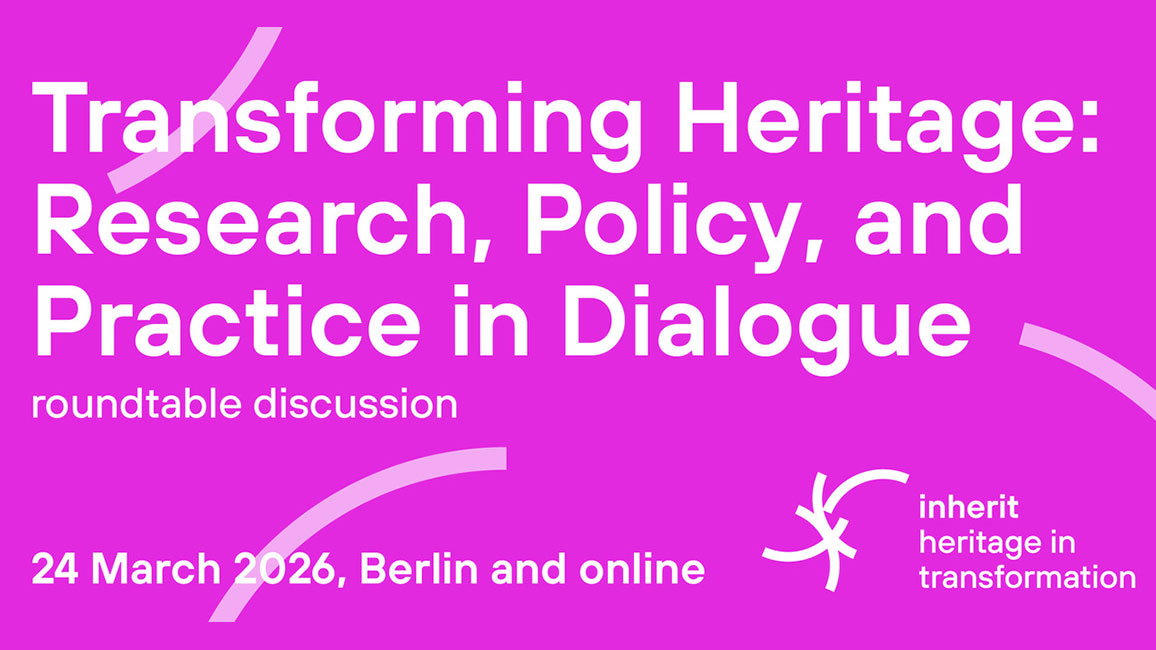
Promotional Banner „Transforming heritage“
inherit
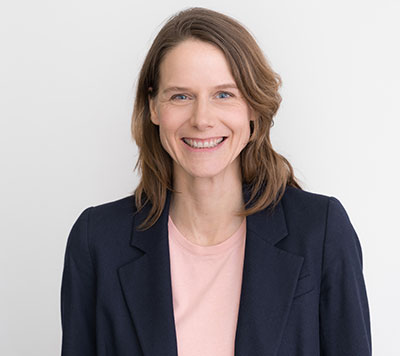
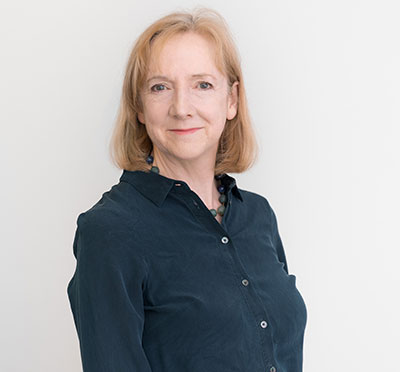
In the interview: Prof. Dr Eva Ehninger and Dr Sharon Macdonald, directors of the Käte Hamburger Centre "inherit. heritage in transformation".
What essential role do the humanities play in our society – with regard to cultural heritage?
Eva Ehninger:
Inherit Director Eva Ehninger
Michelle Mantel
The humanities reveal what often remains invisible. Cultural heritage is never neutral, but always coloured by the stories people tell about it. These stories can create identity, but they can also exclude others. The humanities explore where these narratives come from, who tells them, who benefits from them, and how they are constantly changing.
At inherit, we use the English term 'heritage' to make it clear that we are not only interested in cultural heritage in the narrow sense: natural heritage, genetic heritage, intangible heritage, inherited knowledge, memory culture – these are all facets that we address in our research.
Sharon Macdonald:
The words people use when talking about cultural heritage make a big difference to societies. In the context of museums, the term "objects" is often used – a term that appears neutral but leaves much untold: Who did an object belong to, who used it, what did it mean to the communities from which it originated? Today, some researchers use the term "cultural belongings" to emphasise that objects have history and meaning long before they come to a museum, and that this history can continue even after they are stored in a museum.
What contribution do they make to strategic debates on cultural heritage, restitution and international cultural exchange?
Inherit Director Sharon Macdonald
Michelle Mantel
Sharon Macdonald:
Humanities research can reveal which perspectives are missing in negotiations, which power dynamics are at work, and how heritage itself is changing. These issues are essential for political and social decision-making processes. Heritage research contributes to debates on pressing social issues – such as how to deal with cultural heritage in international conflicts or the return of cultural belongings or ancestors.
Eva Ehninger:
One example is the work of Charlotte Joy, Head of Culture at the British UNESCO Commission, who is currently a fellow at inherit. Her research focuses on the role of knowledge and material evidence in dealing with cultural heritage in crisis and conflict situations – for example, before the International Criminal Court. In a case study, she focuses on the Broken Hill Skull (Kabwe 1), a skull found in 1921 in what is now Zambia, which is currently kept at the Natural History Museum in London. There is controversy over who it belongs to and how this question can be answered.
How does inherit position cultural heritage research for the future?
Eva Ehninger:
International and interdisciplinary work is central to our approach. Every year, 15 fellows come to Berlin for up to ten months to form a learning community with our team and contribute their own research work. Our fellows come from all over the world and from a wide variety of disciplines – currently from literary studies, law, archaeology, anthropology, art history, museum studies, political science and the visual arts. This diversity of perspectives is a great opportunity for us. It is the basis for the successful further development of the humanities in Germany.
Sharon Macdonald:
Knowledge exchange and artistic research are important cross-cutting themes – every year, three to six of our fellows come from the field, working as artists, curators, writers or in education. It is important to us to explore new avenues for knowledge production in this way and to actively incorporate perspectives from outside the academic context into our research.
As researchers, we want to contribute knowledge and methods to help shape the positive management of cultural heritage. This includes working with people in practice and politics and making current debates publicly accessible.
Eva Ehninger:
That's why we're particularly excited about the panel on 24 March, which will bring together a wide range of perspectives. As a researcher and UNESCO representative, Charlotte Joy has a wealth of experience in how research outputs can be designed to be specifically applicable in political decisions on cultural heritage. We are also looking forward to Marlen Meißner and Ulrike Guérin, who work for UNESCO in Germany and France, as well as Katharina Ribbe from the Foreign Office, with whom we will discuss the importance of cultural heritage in international relations.
Thank you very much for your insights and good luck with your event!
Click here for the inherit roundtable"Transforming Heritage: Research, Policy, and Practice in Dialogue". The event will take place on 24 March 2026 from 6 to 8 p.m. in a hybrid format, online and at Humboldt University in Berlin, Dorotheenstraße 26, 10117 Berlin, Lecture Hall 207.
No registration is required to join the online stream; a link for online participation will be provided here in due course. If you would like to attend in person, please register by 20 March 2026 at info-inherit@hu-berlin.de.
Käte Hamburger Centre for Advanced Study "Heritage in Transformation" (inherit)
The BMFTR-funded Käte Hamburger Centre for Advanced Study "Heritage in Transformation" (inherit) is developing a new, transdisciplinary and practice-oriented form of heritage studies that focuses on humanities perspectives on global social transformation processes. The programme addresses key questions of our time – questions of identity and difference, belonging and ownership, and the relationship between history, the present and the future. Last but not least, it addresses the question of what role cultural and natural heritage and their interactions can play in shaping social and transcultural relations in the future.
Board of Directors: Prof. Dr. Eva Ehninger, Prof. Dr. Sharon Macdonald, Humboldt University of Berlin
Käte Hamburger International Centres
The BMFTR-funded Käte Hamburger International Centres offer humanities and social science scholars the opportunity to conduct research on topics of their own choosing, free from many of the obligations of everyday academic life, together with outstanding national and international scholars. To this end, the colleges invite researchers from all over the world, known as fellows, to Germany for up to twelve months.
We want this website to meet your needs as best as possible. To this end, we use cookies and the web analytics tool Matomo to learn which pages are visited most often. Your visit is currently not being counted. By allowing us to count your visit anonymously, you help us to achieve this goal. Web analytics enable us to adapt this website to your needs. No data is forwarded to third parties. For further information, please see our privacy notice.