How coronavirus changed our social interactions: findings from the BMFTR CoESI project
What impact has the coronavirus pandemic had on social life – and what are the consequences? This fascinating question was discussed at the online closing event of the CoESI project at the end of November 2025. Here are the initial findings.
Adobe Stock/H_Ko
Dr. Oliver Huxhold, CoESI project manager, psychologist and head of research for health and social relations at the German Centre for Ageing Issues.
Christoph Soeder
The coronavirus pandemic has profoundly and abruptly changed our social interactions – with far-reaching consequences. Contact restrictions at the beginning of the pandemic led to an increase in loneliness and depressive symptoms, as well as exacerbating existing social inequalities. This is one of the findings of the BMFTR project CoESI (Consequences of the coronavirus pandemic for the development of social integration in middle and older adulthood). CoESI is one of 18 projects funded by the Federal Ministry of Education and Research (BMFTR) within in the funding line "Social impacts of the coronavirus pandemic – research for integration, participation and renewal".
Comprehensive database
While the short-term consequences of the pandemic have been well researched, comprehensive findings on the long-term effects on social integration have been lacking until now. This is precisely what the CoESI research team at the German Centre for Ageing Research (DZA) has been investigating since February 2023. The focus was on how the pandemic and the associated measures have affected the long-term social integration of people in the second half of life in Germany.
The representative data from the German Ageing Survey, with around 5,000 participants, served as the basis for the study. Five measurement points were recorded, covering different phases of the pandemic in Germany: before the outbreak of the pandemic in 2017, during the crisis summer of 2020, during the ongoing pressure in 2021/22, in the transition phase of 2022/23 and in the new normal of 2023/24.
CoESI systematically analysed social integration on three levels: close support relationships, broader networks and participation in group activities. The project thus focused on family ties as well as friendships, neighbourhood contacts and involvement in groups or associations. At the same time, the CoESI team analysed how social inequalities – such as education, health or financial situation – influence how people cope with pandemic-related stress. "Social disadvantage was a decisive risk factor during the pandemic: people with low socioeconomic status were not only more severely affected, but were also less able to compensate for the pandemic-related losses in the long term," explains Dr Oliver Huxhold, CoESI project manager at the German Centre for Ageing Issues.
Research on well-being, loneliness and participation
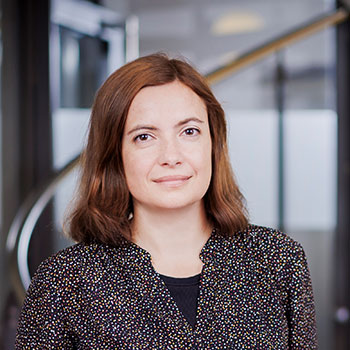
Dr. Nadiya Kelle, deputy CoESI project manager, sociologist and research assistant at the German Centre for Ageing Issues.
Christoph Soeder
Research on well-being, loneliness and participation The results so far paint a nuanced picture: family and close personal relationships, especially with regard to grandchild care, proved to be surprisingly stable. Grandchild care was beneficial to grandparents' well-being, reduced loneliness and did not cause increased stress. Another finding was that during the pandemic (winter 2020/21), the importance of caring for grandchildren for well-being increased. Friendships, neighbourhood contacts and activities in groups or clubs are equally important. They play a significant role in well-being, especially in later stages of life and particularly for people with low socio-economic status. CoESI focused on voluntary work because it is particularly conducive to the formation of loose relationships. Thus, in the first year of the pandemic, there was no decline in voluntary participation in the second half of life. However, this does not apply to all population groups. For example, the group of people who do not engage in voluntary work has grown among those with a low level of education. With regard to the protective function of voluntary work for well-being, the CoESI researchers came to the following conclusion: although voluntary work did not protect against loneliness at the beginning of the pandemic, it did ensure that people felt part of society. "Diverse networks are particularly important during the pandemic: close ties seem to be important in preventing or alleviating loneliness. Loose ties seem to be important in preventing or alleviating feelings of social exclusion," summarises Dr Nadiya Kelle, deputy project manager. The final study results will be available in June 2026. CoESI is thus making an important contribution: the findings have not only scientifically analysed and highlighted the extent of pandemic-related changes, but also help to develop targeted future measures to strengthen social integration and participation. "At our closing event, it became particularly clear how great the social need is to translate our findings into concrete socio-political action," emphasises Huxhold.
BMFTR Project CoESI (Consequences of the Coronavirus Pandemic for the Development of Social Integration in Middle and Older Adulthood)
The aim of the project by the German Centre for Ageing Issues is to investigate changes in the social integration of people in the second half of life during and after the coronavirus pandemic. To this end, three areas of social integration are examined using sociological, social psychological and health psychological approaches: close support relationships, broader networks and participation in group activities. The focus is firstly on the extent to which these three areas of integration have been affected, secondly on the effects of pandemic-related changes in integration on experiences of loneliness, subjective well-being and health, and thirdly on factors that facilitate or hinder social integration after the pandemic has subsided. The special role of social inequality is taken into account in all three questions. In addition to our own surveys, panel data from the German Ageing Survey will be used.
We want this website to meet your needs as best as possible. To this end, we use cookies and the web analytics tool Matomo to learn which pages are visited most often. Your visit is currently not being counted. By allowing us to count your visit anonymously, you help us to achieve this goal. Web analytics enable us to adapt this website to your needs. No data is forwarded to third parties. For further information, please see our privacy notice.